
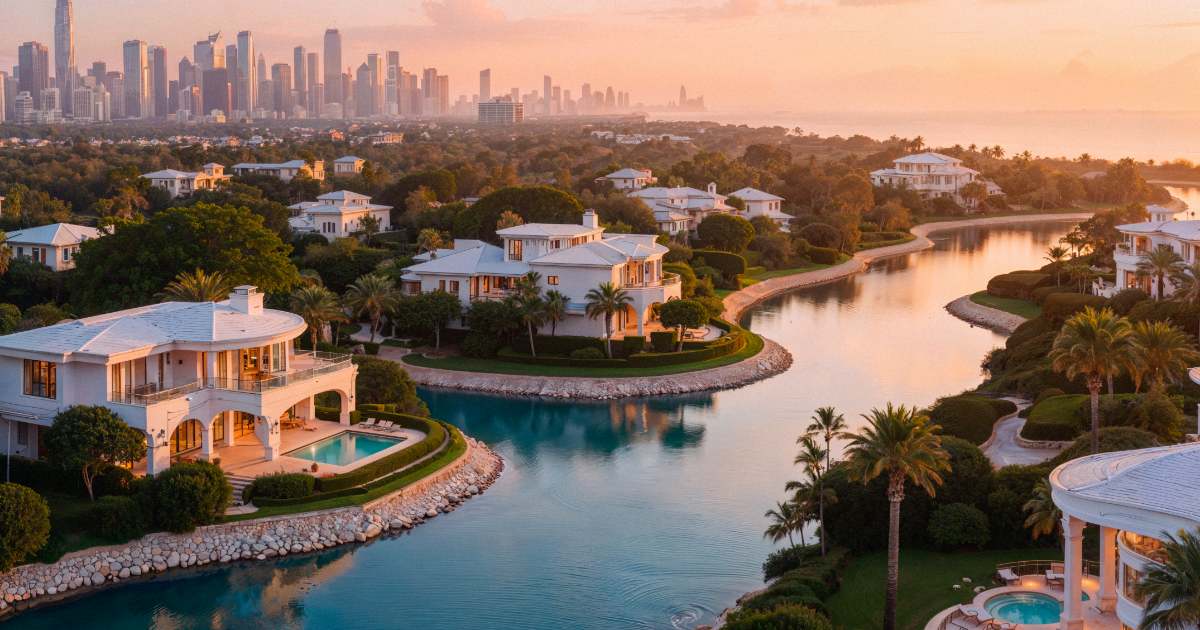
Dubai and the UAE are home to some of the world’s most prestigious residential communities, offering luxury villas, waterfront residences, penthouses, branded apartments, and exclusive gated developments. Whether you’re purchasing a primary residence or investing in premium real estate, financing a high-value property requires careful planning.
For buyers seeking a Shariah-compliant financing solution, an Islamic mortgage for luxury homes provides a structured way to purchase premium properties without relying on conventional interest-based lending. Islamic home finance follows ethical financial principles while offering flexible solutions for eligible buyers.
This guide explains how Islamic mortgages for luxury homes work, eligibility requirements, financing structures, required documents, and key considerations before purchasing a premium property.
What Is an Islamic Mortgage for Luxury Homes?
An Islamic mortgage for luxury homes is a Shariah-compliant property financing solution designed for buyers purchasing high-value residential properties.
Unlike conventional mortgages that charge interest, Islamic finance uses approved contractual structures based on asset-backed transactions and risk sharing. The financing arrangement is structured to comply with Islamic financial principles while enabling customers to purchase qualifying luxury properties.
Luxury homes that may qualify include the following:
- Waterfront villas
- Beachfront properties
- Branded residences
- Luxury apartments
- Penthouses
- Golf community homes
- Gated community villas
- Custom-built villas
- High-end investment properties
Financing eligibility depends on the lender’s policies, the property’s value, and the applicant’s financial profile.
How Does Islamic Financing Work for Luxury Properties?
Islamic financial institutions generally use one of several Shariah-compliant structures.
Diminishing Musharaka
This is one of the most common financing methods for residential property.
The customer and the financial institution jointly acquire the property. Over time, the customer gradually purchases the institution’s ownership share while making agreed occupancy payments for the remaining share until full ownership is achieved.
Murabaha
Under a Murabaha arrangement:
- The financial institution purchases the property.
- The property is sold to the customer at an agreed price that includes a disclosed profit margin.
- The customer repays the agreed amount through scheduled instalments.
The pricing structure is agreed in advance, providing clarity throughout the financing period.
Ijara
Ijara is a lease-based financing model.
Typically:
- The financial institution acquires the property.
- The customer leases the property under agreed terms.
- Ownership is transferred according to the financing agreement once contractual conditions have been satisfied.
The financing structure available depends on the institution and the specific property transaction.
Benefits of Financing Luxury Homes Through Islamic Home Finance
Many buyers choose Islamic financing because it offers:
- Shariah-compliant property financing
- Transparent contractual arrangements
- Clearly defined financing terms
- Financing solutions for premium residential properties
- Flexible options for eligible UAE residents and expatriates
- Financing for owner-occupied and qualifying investment properties
Selecting the right financing structure depends on your financial objectives and the lender’s criteria.
Who Can Apply?
Eligibility requirements vary between financial institutions, but financing may be available to:
- UAE nationals
- UAE residents
- Eligible expatriates
- Business owners
- Self-employed professionals
- Senior executives
- Investors purchasing qualifying luxury properties
Each lender assesses applications individually based on affordability, creditworthiness, and property eligibility.
Documents Required
Applicants generally provide documentation relating to identity, income, and the property being financed.
Personal Documents
- Passport
- Emirates ID
- Valid UAE residence visa (where applicable)
Financial Documents
For salaried applicants:
- Salary certificate
- Recent bank statements
- Payslips where requested
For self-employed applicants:
- Trade licence
- Company ownership documents
- Business bank statements
- Audited or management financial statements (where required)
Property Documents
Once a property has been selected, lenders commonly request the following:
- Memorandum of Understanding (MOU) or sale agreement
- Property details
- Title deed (where applicable)
- Property valuation report
- Developer documentation for eligible off-plan projects
Additional documentation may be requested depending on the property’s value and financing structure.
Financing Considerations for Luxury Homes
High-value property purchases often involve additional considerations, including:
Property Valuation
Luxury homes are typically subject to an independent valuation to confirm market value before financing approval.
Down Payment
The required contribution varies depending on the lender, the applicant’s profile, the property’s purchase price, and applicable regulations.
Affordability Assessment
Lenders review:
- Income
- Existing liabilities
- Credit profile
- Debt-to-income ratio
- Business performance (for self-employed applicants)
- Source of funds, where applicable
Meeting the minimum eligibility criteria does not guarantee financing approval.
Tips Before Applying
To improve the financing process:
- Obtain mortgage pre-approval before beginning your property search.
- Prepare all required documents in advance.
- Review your credit profile and existing liabilities.
- Compare financing solutions from multiple Islamic financial institutions.
- Understand the total costs associated with purchasing a luxury property.
- Work with experienced mortgage professionals who understand premium real estate transactions.
Preparation can reduce delays and support a smoother purchase process.
Why Work With an Islamic Mortgage Advisor?
Luxury property financing often involves larger transaction values and more detailed financial assessments.
An experienced Islamic mortgage advisor can help you.
- Compare Shariah-compliant financing options.
- Identify lenders that finance luxury properties.
- Arrange mortgage pre-approval.
- Review documentation before submission.
- Explain Murabaha, Ijara, and Diminishing Musharaka structures.
- Coordinate with banks, developers, and real estate professionals throughout the transaction.
Independent guidance can help simplify the financing process and ensure you understand the available options.
Final Thoughts
Purchasing a luxury home is a significant financial decision, and choosing the right financing structure is just as important as selecting the right property. Islamic mortgages provide eligible buyers with a Shariah-compliant way to finance premium homes while maintaining transparency and ethical financial principles.
Whether you’re buying a waterfront villa, a branded residence, or a luxury penthouse in Dubai, understanding your financing options, preparing the required documentation, and seeking professional advice can help make the process more efficient and informed.
Frequently Asked Questions (FAQs)
Can I get an Islamic mortgage for a luxury home in Dubai?
Yes. Many Islamic financial institutions offer Shariah-compliant financing for eligible luxury residential properties, subject to their lending criteria.
What types of luxury properties can be financed?
Depending on the lender, financing may be available for villas, penthouses, branded residences, luxury apartments, waterfront homes, and other qualifying residential properties.
Can expatriates apply?
Yes. Eligible expatriates may apply for Islamic home finance, subject to the lender’s policies and affordability assessment.
What documents are required?
Applicants generally provide identification documents, proof of income, bank statements, and property-related documentation. Self-employed applicants typically submit additional business records.
Is mortgage pre-approval recommended?
Yes. Mortgage pre-approval helps buyers understand their financing capacity before selecting a luxury property.
Which Islamic financing structures are commonly used?
Common structures include diminishing musharaka, murabaha, and ijara, depending on the lender and the transaction.
Does the value of the property affect the approval process?
Yes. High-value properties often involve more detailed affordability assessments, independent valuations, and additional documentation.
Should I use an Islamic mortgage advisor?
An advisor can help compare financing options, explain eligibility requirements, prepare documentation, and guide you through the financing process for luxury property purchases.